

Plate method meals
Today’s theme is about creating a balanced plate. Canada’s Food Guide recommends building each plate or bowl with half vegetables and fruit, a quarter whole grains, and a quarter protein. This is the recommended way of eating for people living with diabetes as it ensures you get fibre with lots of non-starchy vegetables and whole grains, as well as lean protein at each meal. The fibre in fruits, vegetables, grains, nuts, seeds, and soy not only helps fill us up, but it also keeps us full longer and slows the rate of digestion of carbohydrates to help manage blood sugar.
Missed the live session? View it on demand now.
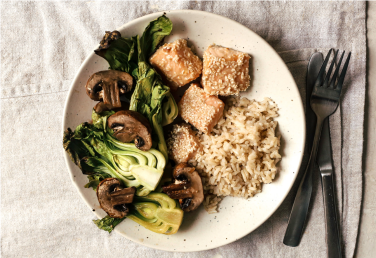
Sesame miso salmon with mushrooms & bok choy
Enjoy miso's unique savoury flavour in these high protein, crunchy sesame-encrusted skewers.
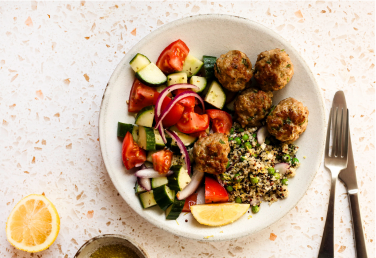
Greek meatballs with quinoa feta pilaf
These easy Greek-style meatballs make for a delicious family-friendly lunch or dinner.
Facts on fibre
Fibre is a type of carbohydrate found in foods that come from plants. It does not get digested or absorbed by the body. Fibre does not increase your blood sugar the way other carbohydrates do, making it an important addition in meals and snacks. Filling three-quarters of each plate or bowl you eat with high-fibre foods helps manage your hunger and blood sugar response. Learn more with Get the facts on fibre.
Balanced plate
Creating healthy meals is as easy as using your plate or bowl for that matter! Filling half your plate with non-starchy vegetables provides low-carbohydrate, high-fibre, nutrient-dense foods. Including whole grains or starch for a quarter of your plate helps with portion control of your carbohydrate-containing foods. The last quarter is for your protein of choice. Balanced plate can help you make healthy decisions when you build your meals.
Additional resources
Diabetes Canada meal planner Recipes Canada's food guide kitchenFrequently Asked Questions (FAQs)
Can I eat rice if I have diabetes?
Rice, especially brown rice and lower glycemic varieties (converted or parboiled rice) are just fine for people living with diabetes. It all depends on the quantity you eat (portion size) and the combination of other foods in a mixed meal. Rice is a carbohydrate so it will increase blood sugar, but it is suggested that people living with diabetes should consume between 45-60 grams of carbohydrates at each meal. Eating 1/3 to 2/3 of a cup will provide between 15-30 grams of carbohydrate as the starchy component of your meal. Including these servings as part of a mixed meal containing fibre, protein and fat is a good way to include rice into a healthy eating pattern.
Soluble and Insoluble fiber - please give more info on the difference.
There are several types of fibre but soluble and insoluble are the two most talked about types. Soluble fibre binds with water in your intestines forming a gel and helps to keep things moving along. It also helps slow the release of sugar from the food we eat and therefore helps lower blood sugar response post meals and it helps in the maintenance of blood cholesterol. Insoluble fibre is what we would call ‘roughage’. It adds bulk to waste and provides structure as it moves through the body, keeping you regular. It can help manage diverticular disease and hemorrhoids. Soluble fibre helps with both constipation and diarrhea management. Insoluble fibre helps prevent constipation if ample water is also consumed. Both feed healthy gut bacteria and help maintain the lining of the intestinal wall. A variety of fibre sources ensures everything remains working as desired. Soluble fibre sources include oats, chia, legumes, some fruits, barley and a few vegetables. Insoluble fibre includes whole grains, most vegetables, nuts and seeds. Regardless, start slowly with increasing high fibre foods in your diet, keep moving your body and add additional water to avoid digestive issues.
Isn't Miso high in salt? This recipe looks great but I'm worried about high salt.
Miso is high in salt but using it in small amounts adds to the flavour of a dish. As with anything, portion matters. There is also low-sodium miso paste available, but you may need to go to a health food store or an ethnic grocery store vs. a regular grocery store to find it. We also tend to get most of the sodium in our diets from packaged or processed foods, breads and prepared meals. A small amount of miso used to add flavour to a home-prepared meal is typically just fine unless you are extremely salt sensitive or have been told to avoid it completely.
Can you provide more information about omega fats? What is EPA and DHA and ALA?
Omega-3 and omega-6 fats are types of polyunsaturated fatty acids that are essential for your body, meaning your body cannot make them, so you need to get them from food. Omega 3 fats are found in fatty fish such as salmon and mackerel and plant sources include walnuts, flaxseeds, chia seeds and their oils. Some plant oils such as soy and canola also contain some omega 3s. Omega 3’s help reduce inflammation, support brain health, and contribute to heart health. Eicosapentaenoic acid (EPA) and docosahexaenoic acid (DHA) are omega fats found in fish and alpha-linolenic acid (ALA) is found in plant sources. ALA can be converted by the body into EPA and DHA but the process is inefficient thus why it is recommended to eat fish, if you can, to obtain omega 3 fatty acids. Commercial fish oil supplements typically contain little to no mercury and are generally regarded as safe. Talk to your doctor before starting any supplements. Omega 6 fats are found in vegetable oils such as canola, soy, sunflower and corn oil along with nuts and seeds. Omega 6 fats help with energy and normal growth. We tend to consume more omega 6 fats in our diets than omega 3s due to eating omega 6 rich oils in processed foods. A balance between omega-3 and omega-6 fats is recommended. As with anything, including a variety of sources that contain these fats is the best way to meet your needs.
What is an alternative for sesame seeds?
Hemp seeds, pumpkin seeds or sunflower seeds would all be good replacements. You could even try crushed pistachios or other nuts or just skip the seeds all together. The salmon will still taste great with the marinade.
Can you give examples of whole grains, besides brown rice? Is oatmeal a good whole grain?
Whole grains include whole wheat breads and tortillas, barley, bulgur wheat, faro, freekeh, buckwheat, teff, millet, sorghum, kamut, less processed oats like old fashioned or steel cut and whole grain crackers (look for > 2 g fibre per serving).
Are there other resistant starches in say pasta form?
Resistant starch is a type of starch that passes through the small intestine undigested and ends up in the large intestine, where it feeds the good bacteria in your gut. Because of this it has a lower impact on blood sugar response compared to non-resistant starch. There are many foods that naturally contain resistant starch such as under-ripe bananas, oats, legumes and whole grains. Resistant starch can also be increased in certain foods by cooling after cooking. Some of these foods include rice, pasta and potatoes. Be sure to reheat properly for food safety or consume in recipes such as pasta or potato salad.
Is the healthy balanced plate based on a 9 inch dinner plate?
In Canada we have not specified the size of the dinner plate, but the American Diabetes Association does suggest a 9” plate. It’s more about the portions of food on the plate than the size of the plate itself.
Is it ok to use TVP to replace say half of the pork?
Yes absolutely. While we did not test this recipe using this ‘blended’ technique adding legumes or soy to meat helps increase fibre and plant-based protein while reducing the cost of the recipe.
Does the flax seed need to be ground to get the benefits from it? Is ground flax seed just as good as whole?
Ground flax seed is thought to be better than whole flax seed. Because of the hard husk, whole flax tends to move through you primarily undigested, so while good for some extra fibre, getting the healthy fats out of the whole seed is much more difficult.
If salt and fat don’t raise our glucose, why do we have to be so careful watching that intake
Many people living with diabetes are also at risk for cardiovascular disease (heart disease). High fat and salt can make heart disease risk higher by increasing blood pressure and cholesterol levels. In general, it is recommended that everyone limit salt and fat intake to help reduce risk of heart disease whether you have diabetes or not.